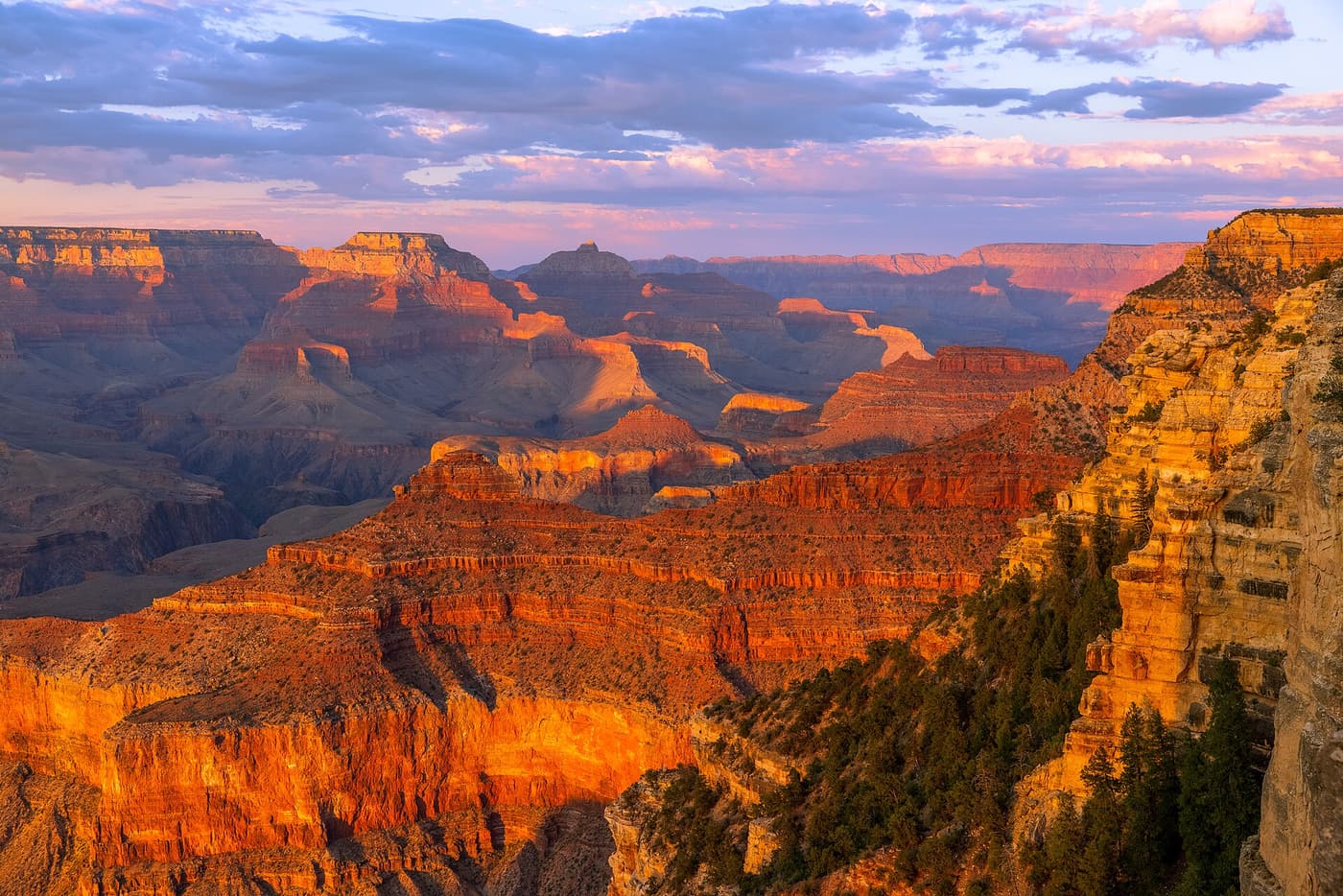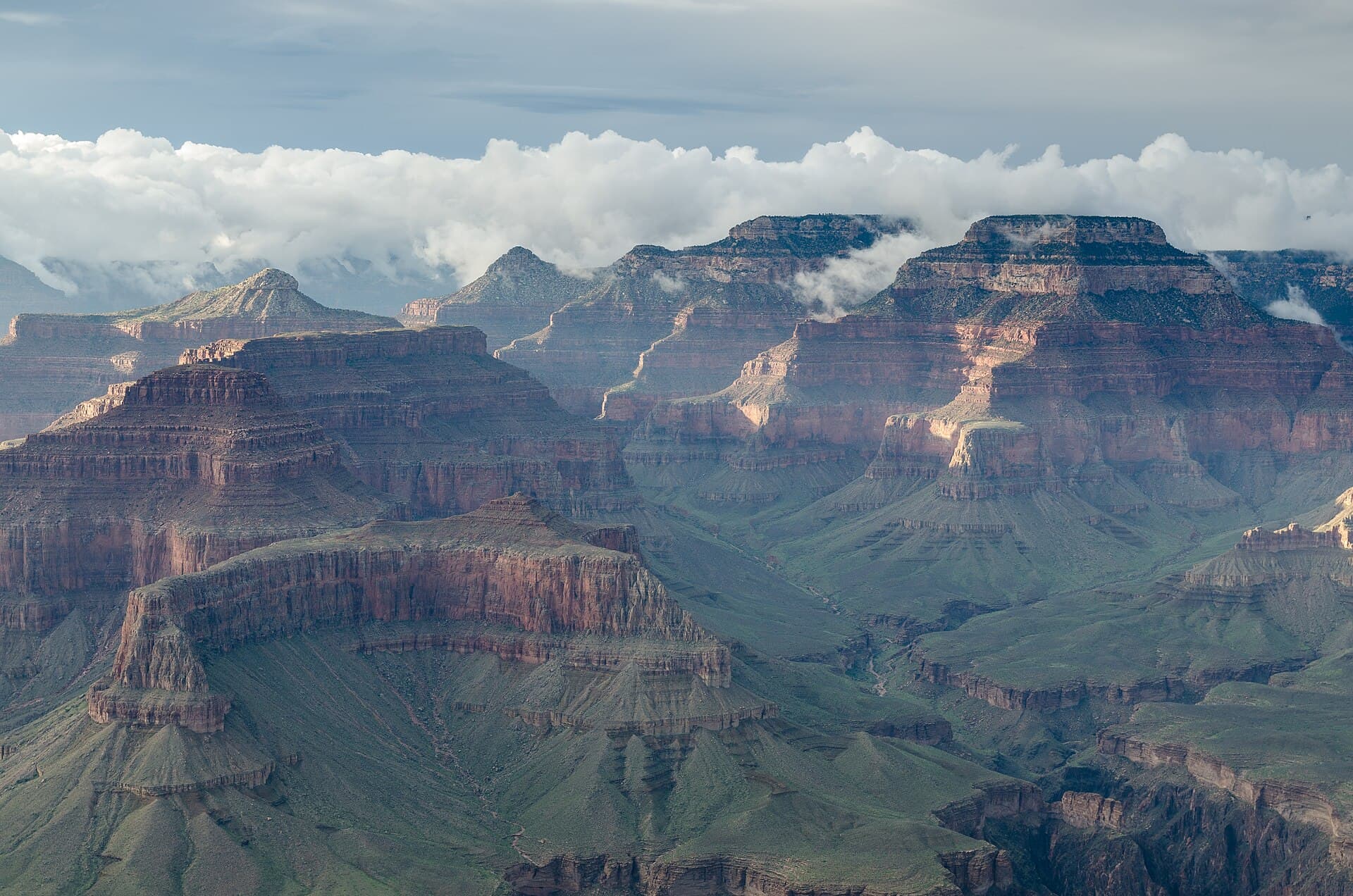
The Grand Canyon is one of the most visited national parks in the United States, with several million visitors a year — and yet it is easy to have a bad day there: wrong rim, wrong time of day, stuck in a parking lot, or worse, in trouble on a trail in the heat. This guide covers what you need to know to make it a great one.
The canyon in brief
The canyon was carved by the Colorado River through the rising Colorado Plateau, exposing rock layers from the nearly two-billion-year-old Vishnu Schist at the bottom to the Kaibab Limestone at the rim. It has been home to Native peoples for thousands of years; eleven tribes today have traditional ties to it, among them the Havasupai, Hualapai, Hopi, Navajo and several Paiute bands. It became a national park in 1919 and a UNESCO World Heritage Site in 1979.
Which part of the canyon?
- South Rim — the main part of Grand Canyon National Park: open all year, with Grand Canyon Village, the visitor center, dozens of viewpoints, lodges and the main trails. The right choice for most first visits.
- North Rim — the other side of the national park: higher, cooler and quieter, normally open mid-May to mid-October only. Its historic lodge burned in July 2025; check current status.
- Grand Canyon West — on the Hualapai Reservation, outside the park: the Skywalk, Eagle Point and Guano Point, about 2.5 hours from Las Vegas. Separate tickets.
- Havasu Canyon — the turquoise waterfalls of the Havasupai Reservation, reached on foot with an overnight permit only.
Our South Rim vs Grand Canyon West guide compares them in detail.
 South Rim
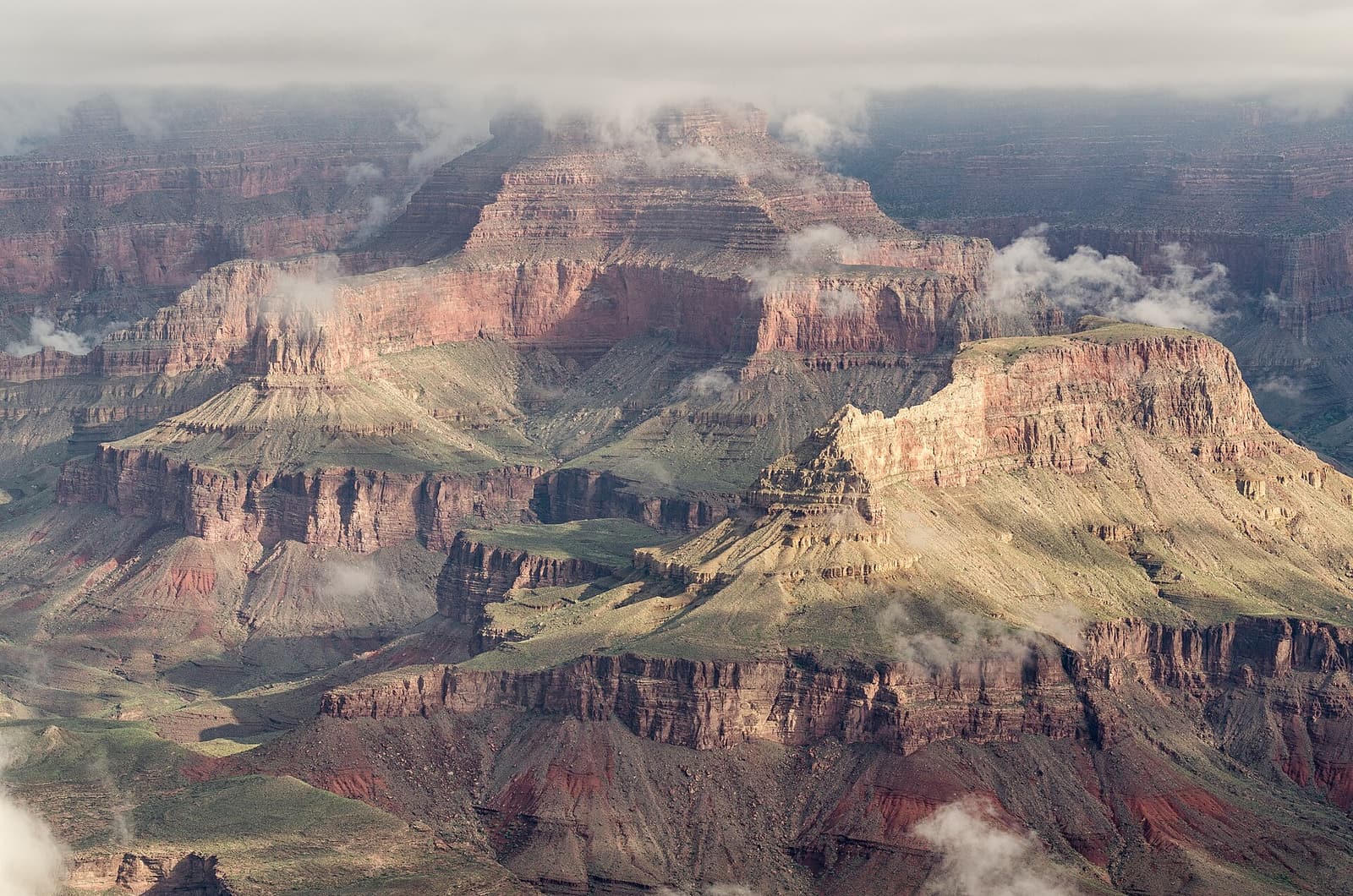
Mather Point
The first, and most famous, view of the canyon
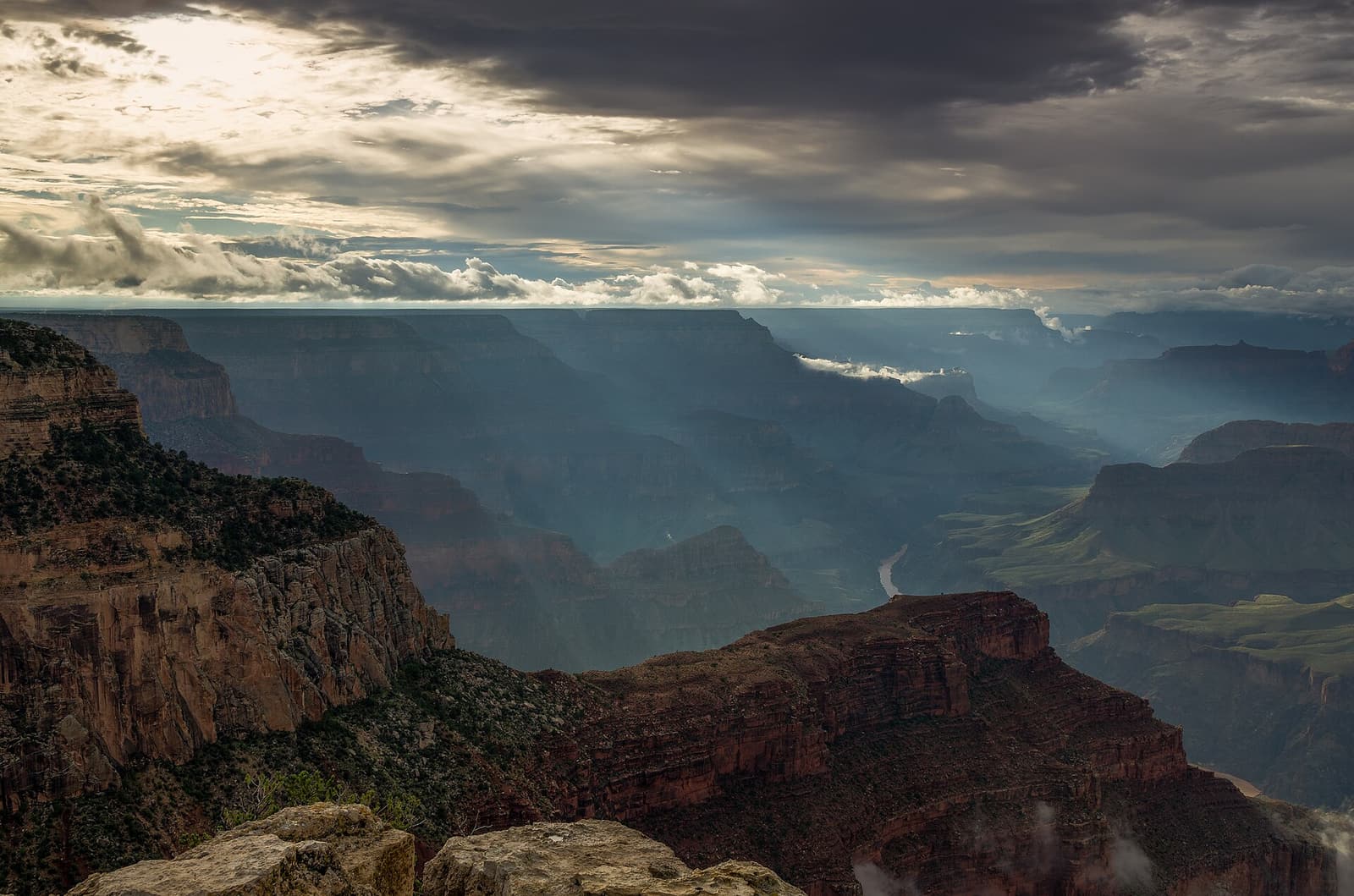
A rocky promontory a short walk from the main visitor center on the South Rim, and the place where most people see the Grand Canyon for the first time. Railed terraces push out over the edge, with a vast view east and west across the canyon. It is busy at sunrise and in the middle of the day, and the Rim Trail runs from here in both directions.
 South Rim
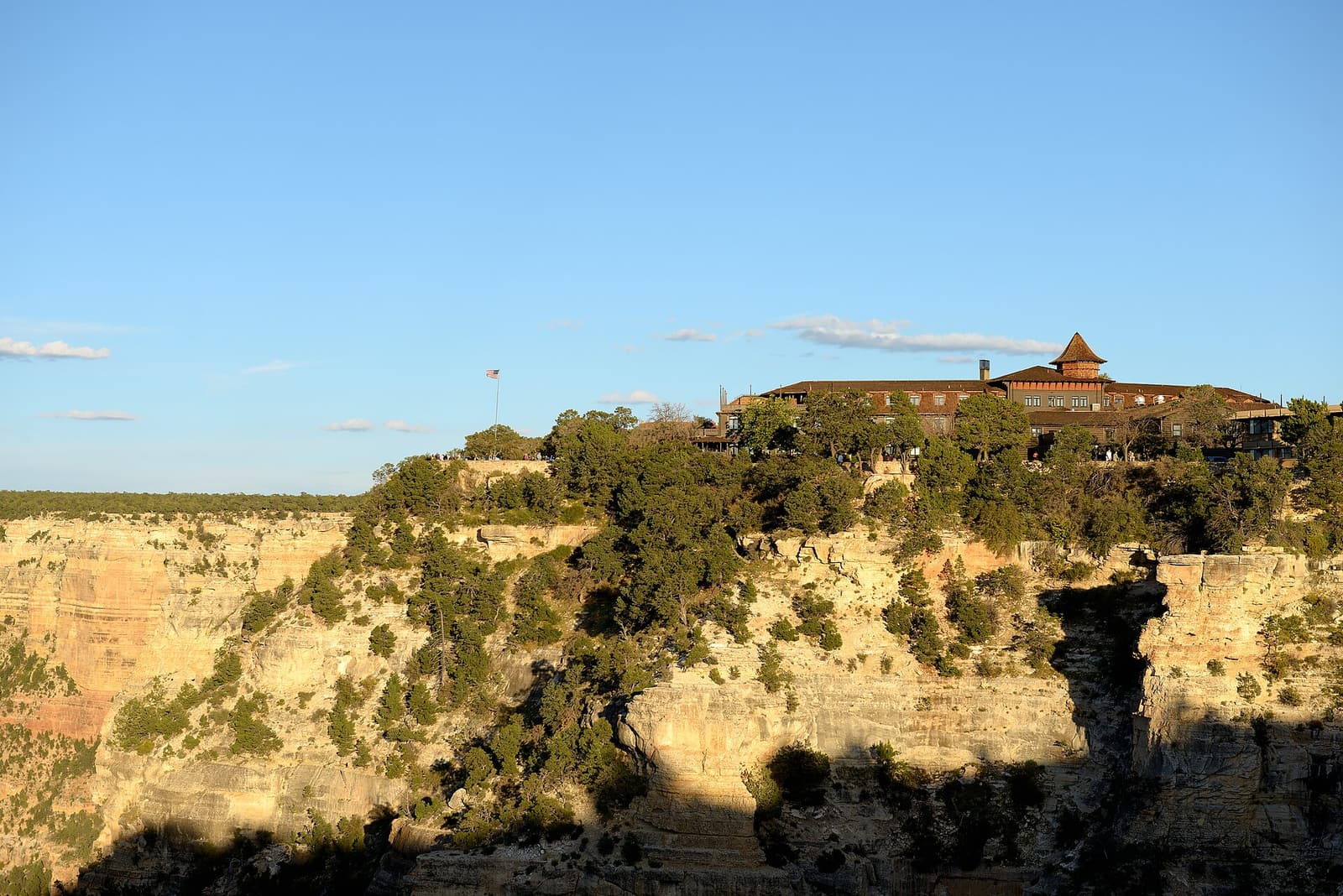
Grand Canyon Village
Historic lodges on the edge of the abyss
The heart of the South Rim: a cluster of early-twentieth-century buildings strung along the rim — El Tovar Hotel, Hopi House, Kolb Studio, Lookout Studio, Bright Angel Lodge — together with the railway depot, the in-park lodges, restaurants and the head of the Bright Angel Trail. You can walk the whole historic district on the paved Rim Trail.
 South Rim
Hermit Road
Seven miles of viewpoints west of the village
The scenic road that follows the rim west from Grand Canyon Village to Hermits Rest, with nine overlooks on the way — among them Powell Point, Hopi Point, Mohave Point and Pima Point. For most of the year it is closed to private cars and served by the free red-route shuttle bus, which makes it the quietest and most rewarding part of the South Rim to explore.
 South Rim
Desert View & the Watchtower
The eastern end of the South Rim
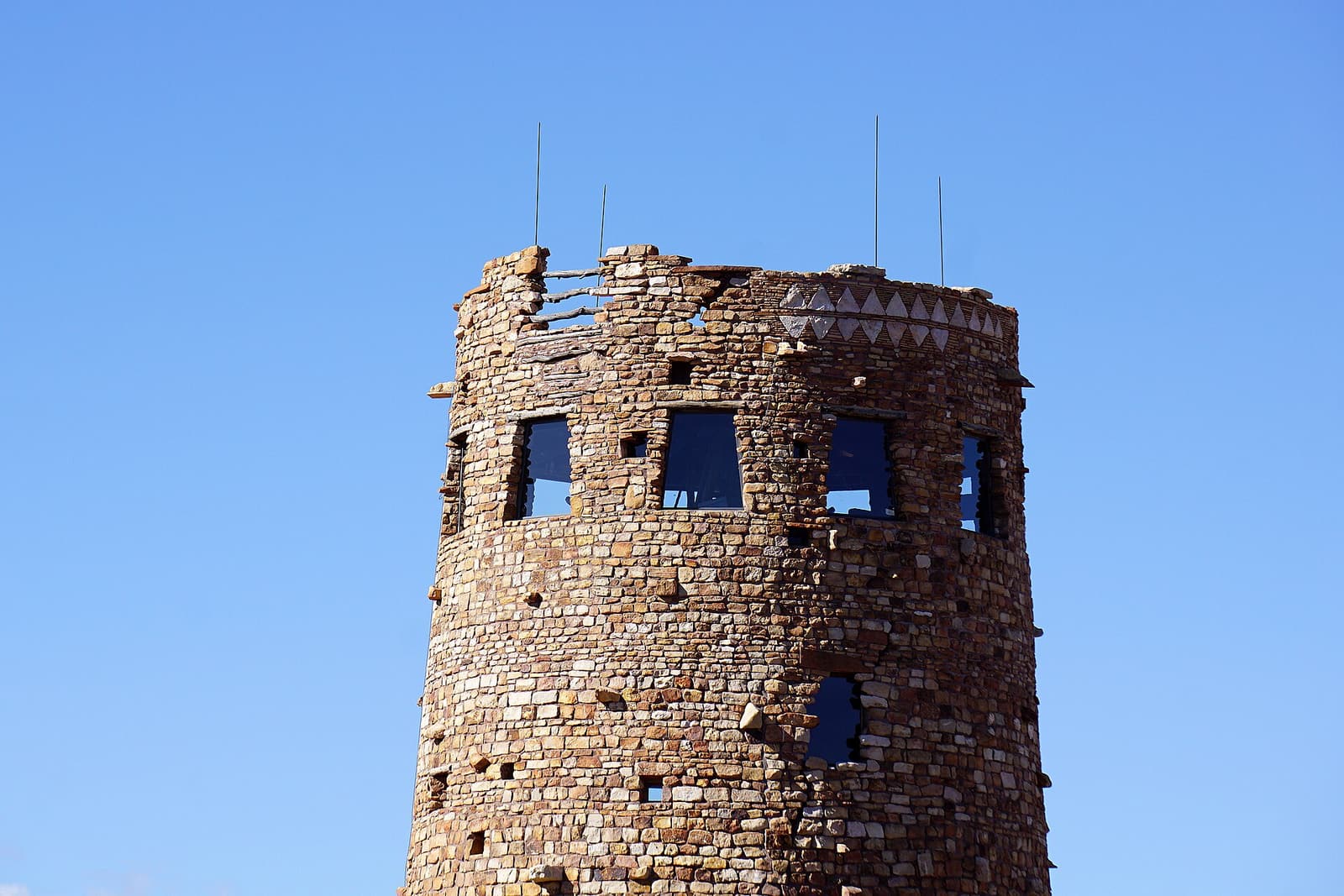
About 25 miles east of the village along Desert View Drive stands the Desert View Watchtower, a 70-foot stone tower designed by Mary Colter and completed in 1932, with murals inside by the Hopi artist Fred Kabotie. From here the canyon opens out towards the Painted Desert, and you can see the Colorado River turning west. On the way are Grandview, Moran, Lipan and Navajo Points.
Fees, passes and opening hours
The national park charges a per-vehicle entrance fee valid for seven days on both rims, and accepts the America the Beautiful annual pass. Since 2026 international visitors aged 16 and over pay an additional nonresident fee at some of the busiest parks, the Grand Canyon included. The South Rim is open 24 hours a day all year; facilities have their own hours. Grand Canyon West charges its own entry, and national park passes are not valid there. Always check current prices before you go.
How long to stay
A day trip shows you the main viewpoints. One night lets you see sunset and sunrise, the canyon’s best hours. Two or three nights let you hike below the rim, drive Desert View and add Page, Sedona or Williams. See our itineraries.
Safety: heat, edges and altitude
- The edge: many viewpoints have no railing. Stay on the trail, keep children close and never step beyond barriers for a photo.
- Heat below the rim: in summer, temperatures in the inner canyon can exceed 110°F (43°C) while the rim is pleasant. Hike early, carry water and salty food, and turn around in time. Do not attempt to hike to the river and back in one day. Read our hiking guide.
- Lightning: from July to September afternoon thunderstorms are common. Leave exposed viewpoints if you hear thunder.
- Altitude: the South Rim is at about 7,000 feet (2,100 m). Take it easy on your first day, and drink plenty.
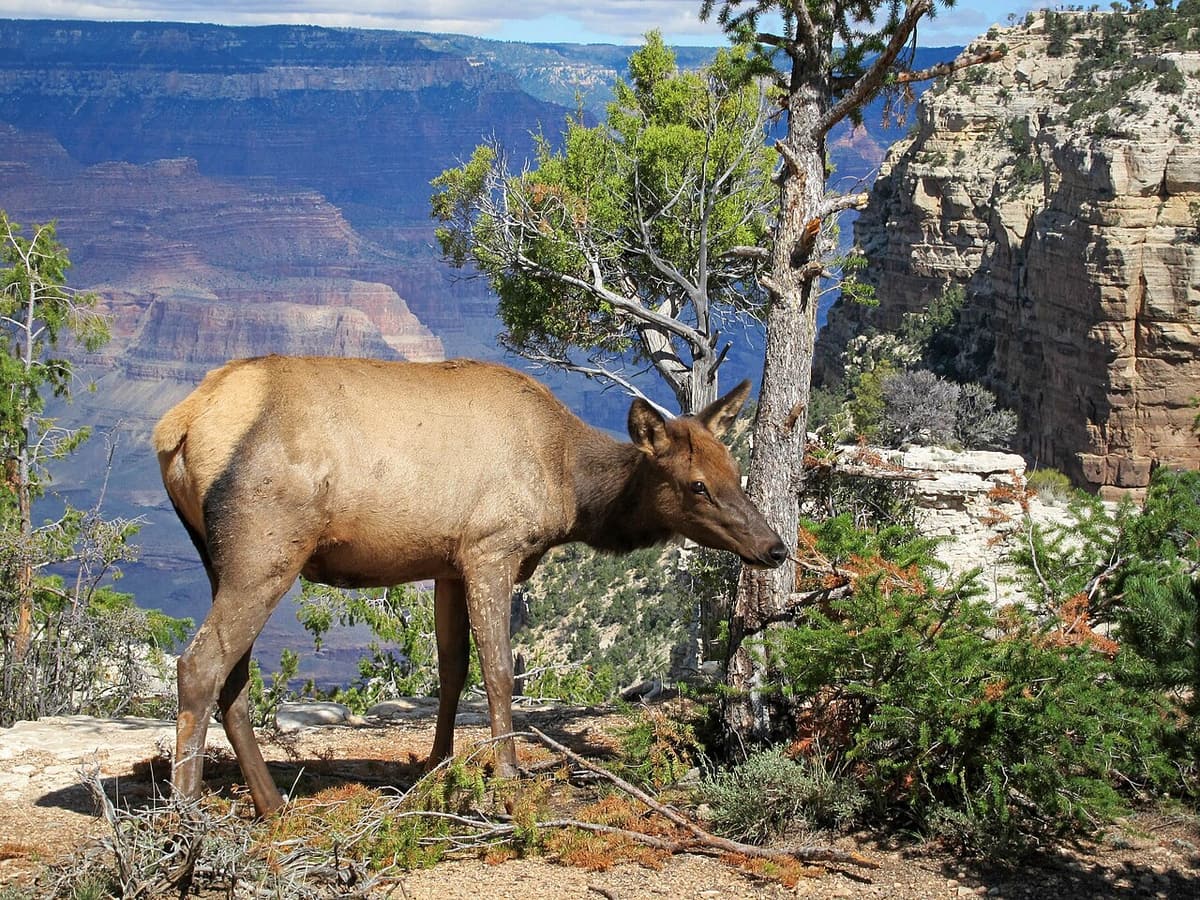
- Wildlife: elk, deer and squirrels are wild. Never feed them, and keep at least 100 feet from elk.
Food, money and connectivity
Inside the park there are restaurants in the lodges, a food court, cafés and a general store at Market Plaza; prices are higher than outside. Cards are accepted almost everywhere and there are ATMs in the village and Tusayan. Mobile coverage is reasonable around the village and patchy elsewhere; download maps offline. Arizona uses Mountain Standard Time all year (no daylight saving), unlike neighbouring Nevada and Utah and the Navajo Nation.
What to pack
- Layers: mornings and evenings on the rim are cool or cold most of the year.
- Sun hat, sunglasses and high-factor sunscreen — the sun is strong at altitude.
- Refillable water bottle — there are filling stations around the village and visitor center.
- Proper walking shoes, and microspikes for icy trails in winter.
- Binoculars for condors, and a headlamp for sunrise.
Accessibility
Much of the Rim Trail between Mather Point and the village, and from the village to Monument Creek Vista along Hermit Road, is paved and fairly level. The park shuttles are wheelchair accessible, and visitors with a disability placard can obtain a permit to drive Hermit Road when it is closed to other cars. Ask at the visitor center.
Wildlife and condors
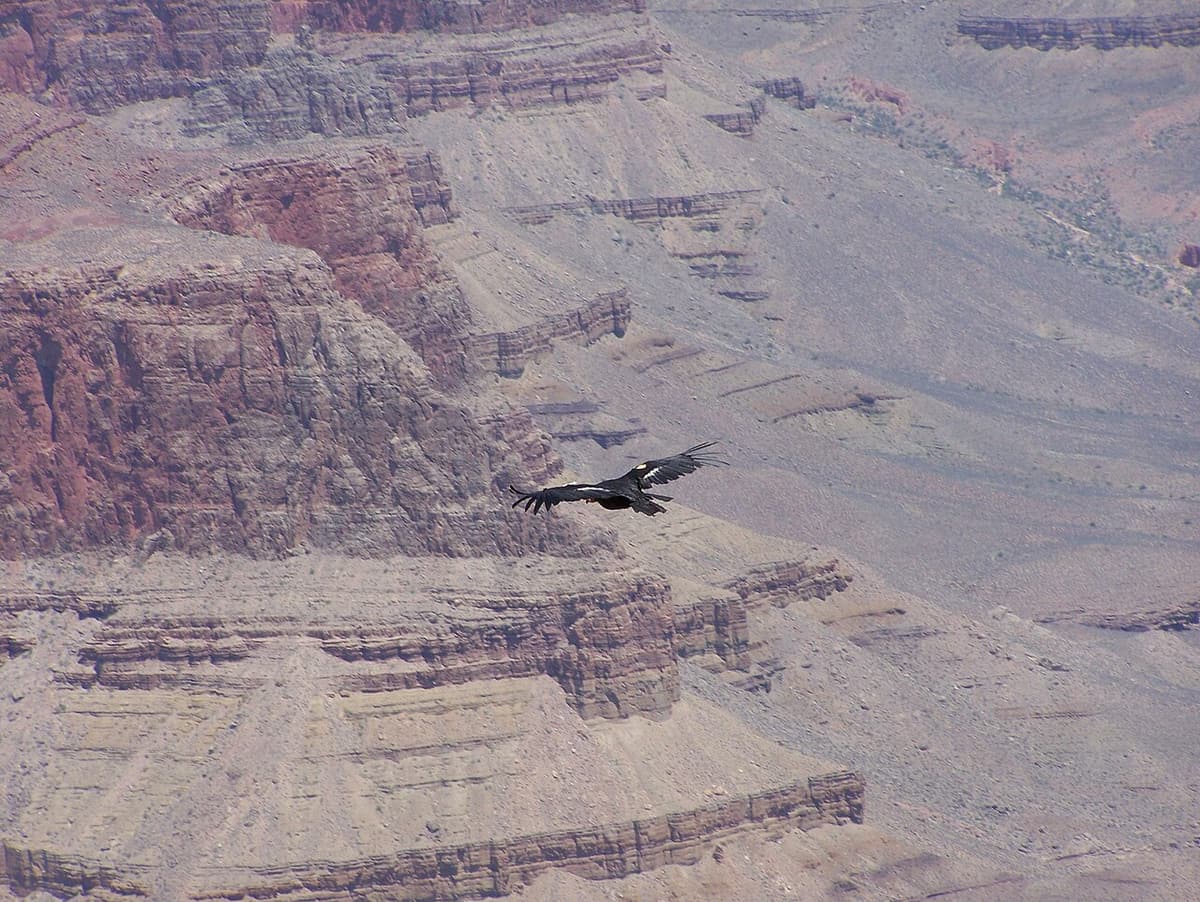
Look out for elk, mule deer, bighorn sheep and ravens — and, with luck, the California condor. These huge vultures, once nearly extinct, were reintroduced in northern Arizona and are sometimes seen riding thermals near the South Rim.
Tours worth considering
You do not need a tour to enjoy the South Rim, but a few are genuinely worth it: a helicopter flight, a guided sunset tour, the Grand Canyon Railway, and an Antelope Canyon tour if you are heading to Page. From Las Vegas, a day tour avoids nine hours of driving. See the tours page or the best tours, ranked.